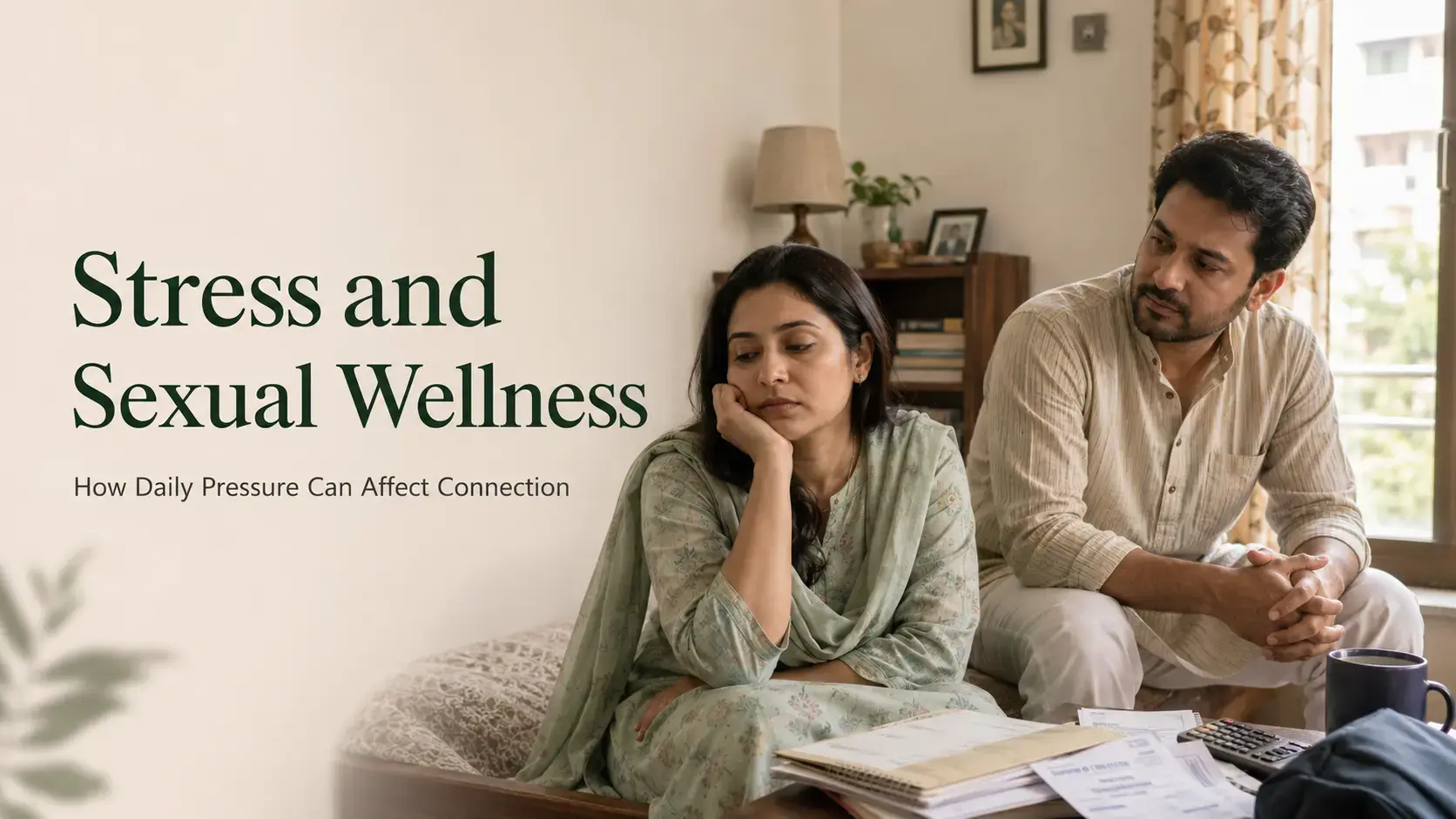
Stress and Sexual Wellness: How Daily Pressure Can Affect Connection
Stress does not stay only in your head. It can affect your mood, patience, sleep, confidence, communication, and the way you feel in a close relationship. When daily pressure builds up, even caring partners may feel emotionally distant, easily irritated, or less comfortable with closeness.
For many Bangladeshi readers, stress can come from several directions at once: work, study, family duties, financial responsibility, traffic, privacy issues, and relationship expectations. When people do not talk about these pressures clearly, they may misunderstand each other. One person may feel rejected, while the other may simply feel tired, anxious, or mentally overloaded.
What This Really Means
Stress can affect sexual wellness by making someone feel emotionally tired, distracted, tense, or less connected. It may also reduce confidence, increase overthinking, and make communication harder in a relationship.
This does not mean stress will affect everyone in the same way. It also does not mean a relationship is failing. It means daily pressure can influence emotional comfort, and a calm, respectful response may help both people understand what is really happening.
Stress Can Quietly Change Relationship Comfort
Stress often works quietly. At first, it may look like tiredness, silence, irritation, or lack of interest. But underneath, the person may be carrying too much mental load.
A person may still care about their partner but feel unable to be fully present. They may want closeness but also feel emotionally drained. This can be confusing for both sides.
When stress is not understood, partners may make painful assumptions. One may think, “Maybe they do not care about me anymore.” The other may think, “Why can’t I explain how tired I feel?”
This is why stress and personal connection need careful discussion. The issue is not always lack of love. Sometimes the mind is simply overloaded.
How Daily Pressure Can Affect Emotional Availability
Emotional availability means having enough mental and emotional space to connect with another person. Stress can reduce that space.
When someone is worried about money, deadlines, family expectations, health concerns, or future plans, their mind may stay busy even during private time. They may be physically present but emotionally distant.
Tiredness Can Look Like Disinterest
A tired person may speak less, avoid deeper conversations, or seem less affectionate. This can hurt the partner who is waiting for warmth or attention.
But tiredness is not always rejection. Sometimes it is a sign that the person needs rest, support, or a better way to explain what they are feeling.
Irritability Can Hide Pressure
Stress can make small issues feel bigger. A normal question may sound like criticism. A simple request may feel like extra responsibility.
This can lead to arguments that are not really about the topic being discussed. The real issue may be emotional overload.
Overthinking Can Increase Distance
When stress and anxiety mix, people may start overthinking relationship moments. They may wonder whether they are failing, disappointing their partner, or not meeting expectations.
This kind of mental pressure can make closeness feel like a test instead of a natural part of connection.
The Link Between Stress, Confidence, and Self-Perception
Stress can affect how people see themselves. When someone is constantly under pressure, they may feel less confident, less patient, or less emotionally steady.
They may begin to think:
“I am not doing enough.”
“I am failing in this relationship.”
“My partner deserves better.”
“I cannot handle everything.”
These thoughts can affect personal comfort. The person may become more guarded, quiet, or anxious. They may avoid conversations because they already feel heavy inside.
Confidence does not grow well when the mind is constantly tired. A person needs emotional safety, rest, and respect to feel more grounded.
Communication Often Becomes Harder Under Stress
Stress can make communication sharp or unclear. Some people talk harshly. Some shut down. Some pretend everything is fine until frustration builds.
In relationships, this can create a cycle. One person asks for connection. The other feels pressured. Then both people feel misunderstood.
Silence Can Create Wrong Stories
When stress is not explained, the partner may create their own explanation. They may think the relationship is losing value or that they are no longer wanted.
A short honest sentence can sometimes prevent a long misunderstanding.
For example:
“I am mentally tired today, but I do not want you to feel ignored.”
Or:
“I care about us. I just need some time to calm my mind.”
Simple words can protect connection.
Blame Makes Stress Worse
When people feel blamed, they usually become defensive. Instead of understanding each other, both sides start protecting themselves.
It is better to say:
“I feel distant from you lately, and I want to understand what is happening.”
Instead of:
“You never care anymore.”
The first sentence opens a door. The second one starts a fight.
Why Daily Pressure Feels So Real in Bangladesh
In Bangladesh, daily stress can build up from many practical realities. Long traffic, crowded routines, work pressure, study pressure, family responsibilities, financial concerns, and limited privacy can all affect emotional wellbeing.
Many people also feel pressure to appear strong. They may not want to admit stress because they fear being judged, misunderstood, or seen as weak. This silence can make relationship problems feel more personal than they are.
Family expectations can add another layer. Some couples or partners may feel pressure around marriage, future planning, children, income, social reputation, or household responsibilities. These expectations can affect emotional comfort, even when no one talks about them directly.
Privacy is also important. In shared homes or busy family environments, personal conversations may be difficult. When people do not get enough calm space, emotional connection can feel rushed or interrupted.
This does not mean Bangladeshi relationships are less healthy. It means many readers face real-life pressures that should be discussed with respect, not shame.
Practical Guidance
Stress cannot always be removed quickly. But the way you respond to it can make a relationship feel safer.
Name the Pressure Clearly
Start by identifying what is actually causing stress.
Is it work? Study? Money? Family expectations? Lack of sleep? Too much screen time? Relationship conflict?
When the source is clearer, the conversation becomes less personal and more practical.
Avoid Taking Every Mood Personally
If your partner seems quiet or tired, do not immediately assume rejection. Ask gently.
You can say:
“You seem tired today. Do you want to talk, or do you need some rest first?”
This gives space without creating pressure.
Use Small Check-Ins
Not every conversation needs to be long. A simple daily check-in can help.
Try asking:
“How are you feeling mentally today?”
“Is there anything making you feel pressured?”
“What would help you feel calmer right now?”
Small questions can build trust over time.
Choose Better Timing
Sensitive conversations are harder when someone is exhausted, hungry, angry, or distracted. Timing can change the whole tone of a discussion.
If both people are tired, it may be better to say:
“Let’s talk about this tomorrow when we can both think clearly.”
That is not avoidance. That can be maturity.
Protect Rest Without Ignoring the Relationship
Rest is not selfish. But disappearing emotionally without explanation can hurt the other person.
If you need space, say it kindly:
“I need some quiet time, but I am not ignoring you.”
That one sentence can reduce confusion.
Keep Expectations Realistic
Daily life will not always feel romantic, peaceful, or emotionally perfect. Some days will be busy and heavy.
A healthy relationship is not built by pretending stress does not exist. It is built by handling pressure with honesty, patience, and care.
Common Misunderstandings
“If stress affects closeness, the relationship is weak.”
Not necessarily. Stress affects many areas of life, including emotional comfort. A relationship can still be strong if both people are willing to communicate and respond with respect.
“My partner should understand without me saying anything.”
That is unfair and unrealistic. People can care deeply and still not know what is happening inside your mind. Clear communication helps reduce guessing.
“Taking rest means avoiding the relationship.”
Rest and avoidance are not the same. Rest is healthy when communicated clearly. Avoidance becomes a problem when someone repeatedly refuses to talk or take responsibility.
“Stress is only a personal issue.”
Stress often affects the relationship atmosphere. One person’s pressure can influence communication, patience, and emotional closeness. That is why both personal care and relationship care matter.
“A quick solution should fix everything.”
Stress is often connected to routine, responsibilities, sleep, finances, family pressure, and emotional habits. It may need time, better communication, lifestyle adjustment, and sometimes professional support.
When to Seek Professional Support
Consider speaking with a qualified mental health professional, doctor, counsellor, or trusted support service if stress continues for a long time, affects daily life, or creates repeated relationship conflict.
Support may be especially important if stress is connected with panic, trauma, deep sadness, fear, coercion, abuse, or a feeling that you cannot speak safely. If pressure is making you feel emotionally overwhelmed or unsafe, do not treat it as a small matter.
Professional guidance can help you understand patterns more clearly. It is not a sign of weakness; it is a way of taking the situation seriously.
Educational Safety Note
This article is for general education and emotional wellbeing awareness only. It is not medical advice, therapy, diagnosis, or professional counselling.
Stress and relationship concerns can be sensitive. If your situation feels serious, unsafe, ongoing, or connected to trauma or mental health symptoms, please consider reaching out to a qualified professional or trusted support person.
BeshiKhushi Editorial Note
BeshiKhushi creates respectful, education-first content for Bangladeshi readers who want clearer guidance around wellbeing, relationships, emotional comfort, and communication.
Our content is designed to support awareness and better conversations. It does not replace professional care, and it does not promote any product, supplement, shortcut, or single method as a solution for emotional, psychological, medical, or relationship concerns.