Why Do Couples Experience Mismatched Desire? Causes, Communication, and Support Options
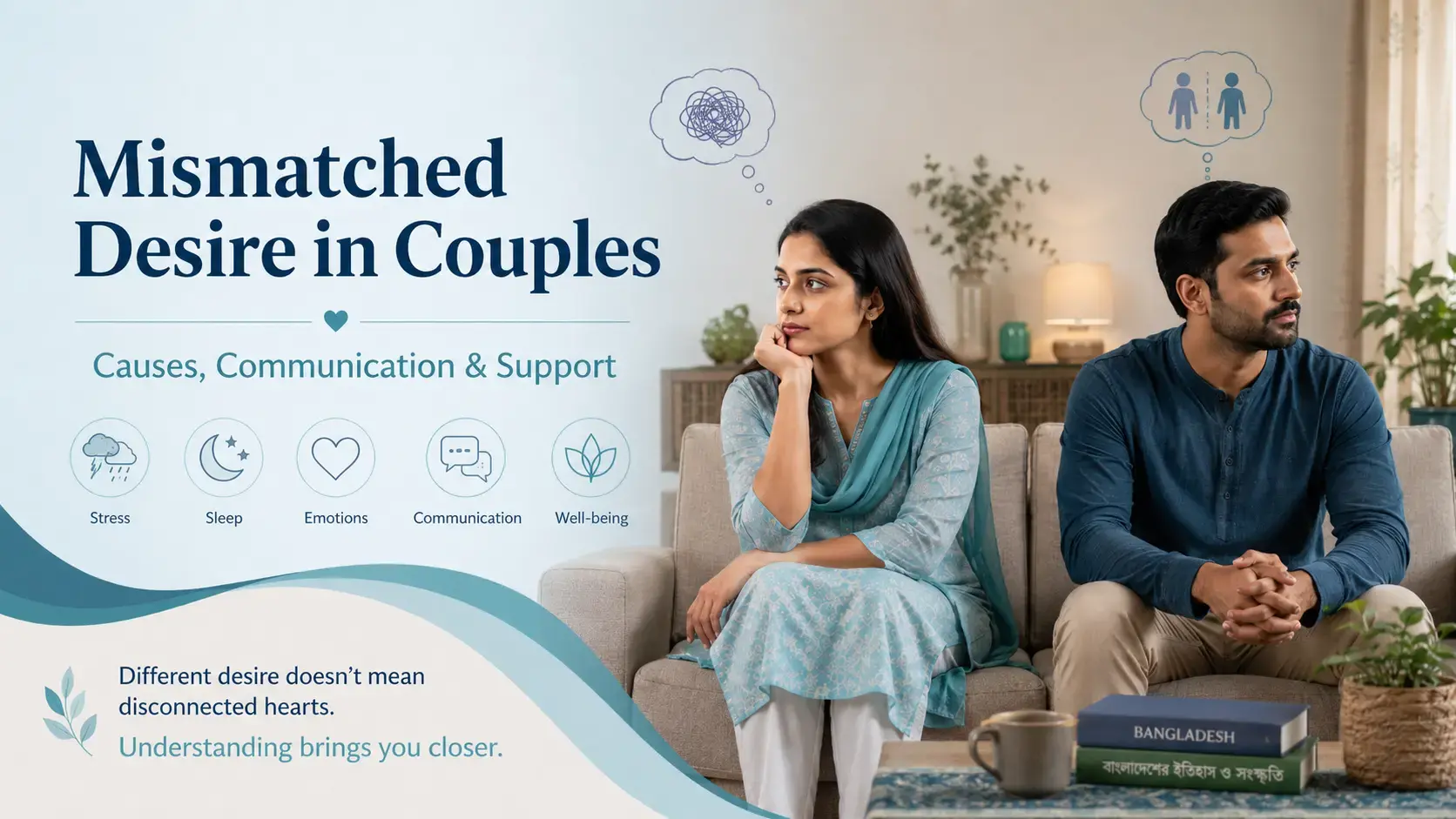
Mismatched desire in couples can feel deeply personal, even when it is not about lack of love. One partner may want more closeness, while the other may feel tired, stressed, distracted, uncomfortable, or emotionally unavailable. If the difference is not understood, both partners can feel hurt in different ways.
For some couples, this difference is temporary. It may happen during work pressure, poor sleep, parenting responsibilities, health changes, medication changes, emotional stress, childbirth, menopause, ageing, or a difficult life stage. For others, the pattern continues and begins to affect trust, emotional safety, and relationship comfort.
This article explains why desire can differ between partners, how couples can talk about the issue without blame, and when professional support may be helpful. It is for health education and relationship awareness only, not diagnosis or treatment.
Quick Answer
Mismatched desire in couples means partners do not always feel the same level of interest in intimacy at the same time. It can happen because of stress, poor sleep, emotional distance, pressure, health conditions, medication effects, childbirth, menopause, ageing, or relationship tension. It does not automatically mean lack of love. If the concern is ongoing, sudden, distressing, or linked with health symptoms, qualified support may help.
Why Desire Can Differ Between Partners
Desire is not always equal between two people. It can change with mood, energy, emotional comfort, privacy, health, stress, and life stage. One partner may feel ready for closeness more often, while the other may need more rest, reassurance, emotional connection, or physical comfort.
This difference can become painful when it is misunderstood.
The partner with stronger desire may feel rejected. The partner with lower desire may feel pressured, guilty, or judged. Both feelings matter. But neither partner should be treated as the automatic problem.
Mismatched desire in couples often becomes harder when both people start guessing the meaning behind the change. One partner may think, “They do not want me anymore.” The other may think, “I do not know how to explain what I am feeling.”
The issue may be emotional, health-related, lifestyle-related, relationship-related, or a mix of several things. That is why the first step is not blame. The first step is understanding what has changed.
When Desire Changes Are Temporary
A difference in desire does not always mean something is seriously wrong. Sometimes life is simply heavy for a while.
Temporary changes can happen during:
• poor sleep
• work pressure
• exam or career stress
• parenting responsibilities
• financial pressure
• family conflict
• grief or emotional strain
• short-term illness
• recovery after childbirth or surgery
• anxiety, worry, or low mood
• reduced privacy at home
In Bangladesh, many couples live in busy households or with extended family. Privacy may be limited, and sensitive conversations may feel difficult. This can affect emotional comfort, closeness, and the ability to speak openly.
Temporary changes deserve patience. But if the pattern continues, causes distress, or creates repeated conflict, couples should not ignore it. It is better to understand the issue early, before silence turns into distance.
How Pressure Can Make the Gap Wider
Pressure usually makes mismatched desire harder. It can make one partner feel unsafe, while the other feels even more rejected.
One partner may push because they feel lonely, unwanted, or worried about the relationship. The other may pull away because they feel blamed, guilty, or emotionally cornered. Over time, the gap can become wider—not because the couple does not care, but because the topic starts to feel tense.
Pressure can look like:
• repeated complaints
• emotional guilt
• comparison with other couples
• silent punishment
• blaming one partner as “cold” or “needy”
• bringing up the issue during anger
• treating every refusal as rejection
• making closeness feel like a duty instead of mutual comfort
These reactions can weaken emotional safety. When a partner feels pressured, desire can reduce further. When a partner feels repeatedly rejected, trust can also become fragile.
The better question is not, “Who is wrong?”
The better question is, “What is making closeness harder for us right now?”
Health, Stress, and Life Stage May Play a Role
Desire can be affected by more than relationship feelings. Health, stress, energy, medicine effects, hormones, pain, sleep, mood, and life stage can all play a role.
Possible contributing factors include:
• ongoing fatigue
• poor sleep
• constant stress or worry
• anxiety symptoms
• depression symptoms
• low confidence or body image concerns
• pain or physical discomfort
• diabetes-related concerns
• heart health concerns
• hormonal changes
• childbirth or breastfeeding-related changes
• menopause-related changes
• chronic illness
• some medicine effects
• recovery after illness or surgery
These factors do not confirm one specific cause. They simply show why guessing can be unfair and risky.
Reliable medical sources note that desire may change with illness, medicines, stress, emotional wellbeing, pregnancy, breastfeeding, menopause, and relationship factors. Chronic diseases and some medicines may also affect sexual health and comfort.
So, if a desire change is sudden, persistent, distressing, or connected with physical symptoms, it should not be treated only as a relationship issue. A qualified healthcare professional can help identify whether health, medicine, stress, or another factor may be involved.
Mismatched Desire Is Not Always Lack of Love
One of the most painful assumptions is that lower desire means lower love.
That is not always true.
A partner may care deeply but feel exhausted, stressed, anxious, physically uncomfortable, emotionally distant, or overwhelmed. Another partner may want closeness because it helps them feel loved and secure. Both experiences can be real at the same time.
Mismatched desire becomes more painful when partners attach fixed meanings to it:
“They do not love me.”
“They only care about intimacy.”
“I am failing as a partner.”
“Our relationship is broken.”
These thoughts can feel convincing during hurt or frustration, but they are not always accurate.
A healthier way to look at mismatched desire is to treat it as a signal. It may point to stress, emotional distance, health concerns, poor sleep, pressure, privacy issues, communication problems, or changing expectations. It is not a reason to shame yourself or your partner.
How Couples Can Talk Without Blame
Talking about desire differences can feel uncomfortable, especially when both partners already feel sensitive. The conversation should happen privately, calmly, and without accusation.
Instead of saying:
“You never care about me.”
A more careful way to begin may be:
“I feel some distance between us, and I want to understand what is affecting us.”
Instead of saying:
“You always pressure me.”
A less harmful way to say it may be:
“I want us to talk about this without making either of us feel blamed.”
These are not counselling instructions. They are examples of calmer language that may reduce defensiveness.
Couples may find the conversation easier when they:
• choose a calm time
• discuss one concern at a time
• avoid blaming words
• listen before defending
• speak about feelings instead of accusations
• respect privacy and discomfort
• avoid pressure around intimacy
• notice health, sleep, or stress changes
• consider support if the pattern is causing distress
The aim is not to force both partners to feel the same way. The aim is to reduce misunderstanding and make the topic easier to discuss honestly.
Bangladesh Context: Why Many Couples Stay Silent
In Bangladesh, many couples may hesitate to talk openly about desire, intimacy, emotional distance, or health-related concerns. The topic may feel too private. Some people fear being misunderstood, judged, or blamed. Others may not know whether to speak with a doctor, counsellor, or another qualified professional.
Family pressure, financial stress, parenting duties, long working hours, poor sleep, and limited privacy can also affect relationship comfort. A husband and wife may continue daily responsibilities while quietly feeling confused, unwanted, guilty, or hurt.
This silence can create a second problem. The original issue may be desire difference, but the deeper damage may come from guessing, avoiding, or blaming.
Couples do not need to share private concerns with everyone. But if the issue is ongoing, distressing, linked with health symptoms, or harming emotional wellbeing, getting qualified help can be a responsible step.
When Mismatched Desire Needs Professional Guidance
Some desire differences improve when stress reduces, sleep gets better, health stabilizes, or communication becomes calmer. But support may be needed when the issue is ongoing, sudden, worsening, or causing distress.
Couples should consider speaking with a qualified healthcare professional if desire changes are linked with:
• pain or physical discomfort
• severe fatigue
• dizziness or weakness
• poor sleep that continues
• medication changes
• diabetes, heart disease, hormonal issues, or long-term illness
• childbirth, breastfeeding-related concerns, or menopause-related changes
• anxiety symptoms, depression symptoms, or mood changes
A doctor or pharmacist may be helpful when health conditions or medicines could be involved. A mental health professional may help when stress, anxiety symptoms, depression symptoms, trauma, or low self-worth are affecting wellbeing. A relationship counsellor may be helpful when repeated conflict, emotional distance, communication breakdown, or pressure is affecting the relationship.
Couples should also seek help if either partner feels unsafe, controlled, humiliated, pressured, or emotionally harmed.
Getting help is not a sign that the relationship has failed. It can simply mean the couple wants to handle the issue more carefully.
What Couples Should Not Do
Mismatched desire can bring strong emotions, but some reactions can make the situation worse.
Avoid these:
• do not blame one partner immediately
• do not assume lower desire means lack of love
• do not pressure, guilt, or compare your partner
• do not use silence as punishment
• do not bring up sensitive concerns during anger if it worsens conflict
• do not self-diagnose from one sign
• do not ignore sudden or persistent symptoms
• do not stop prescribed medicine without medical advice
• do not take random pills or supplements based on online claims
• do not rely only on social media advice
• do not shame yourself or your partner
It is better to pause, look at the pattern, and understand what might be making the difference harder for both partners. Desire differences can be emotional, health-related, lifestyle-related, relationship-related, or mixed.
Short Summary
Mismatched desire in couples means partners may not feel the same level of interest in intimacy at the same time. This can happen because of stress, poor sleep, emotional distance, health conditions, medication effects, childbirth, menopause, ageing, low confidence, privacy concerns, or relationship pressure.
It does not automatically mean lack of love or relationship failure. Couples should avoid blame, guilt, comparison, and pressure. A better approach is to talk calmly, notice patterns, consider health or emotional wellbeing factors, and seek qualified support if the concern is ongoing, sudden, distressing, or linked with physical or emotional symptoms.
References
Mayo Clinic — Low Sex Drive in Women: Symptoms and Causes
Supports cautious discussion of desire changes related to life stage, illness, medicines, pregnancy, menopause, emotional wellbeing, and relationship factors.
Link: https://www.mayoclinic.org/diseases-conditions/low-sex-drive-in-women/symptoms-causes/syc-20374554
MedlinePlus — Sexual Health
Supports the general explanation that sexual health and intimacy may be affected by chronic diseases and medicines.
Link: https://medlineplus.gov/sexualhealth.html
MedlinePlus — Coping with Chronic Illness
Supports cautious discussion of long-term illness affecting stress, anxiety, anger, tiredness, pain, independence, and daily life.
Link: https://medlineplus.gov/copingwithchronicillness.html
NHS — Get Help with Stress
Supports the careful mention that stress may affect concentration, worry, sleep, irritability, and behaviour.
Link: https://www.nhs.uk/mental-health/feelings-symptoms-behaviours/feelings-and-symptoms/stress/
BACP — Couples Counselling
Supports the careful mention that couples may seek counselling for lack of intimacy, communication breakdown, trust issues, life transitions, work stress, family conflict, and financial pressure.
Link: https://www.bacp.co.uk/about-therapy/what-therapy-can-help-with/relationships/couples-counselling/
Final Disclaimer
This article is for educational purposes only and is not a substitute for professional medical advice, diagnosis, treatment, or relationship counselling. If you have ongoing, sudden, distressing, or concerning symptoms, or if relationship concerns are affecting your wellbeing, speak with a qualified healthcare professional, mental health professional, or relationship counsellor.