
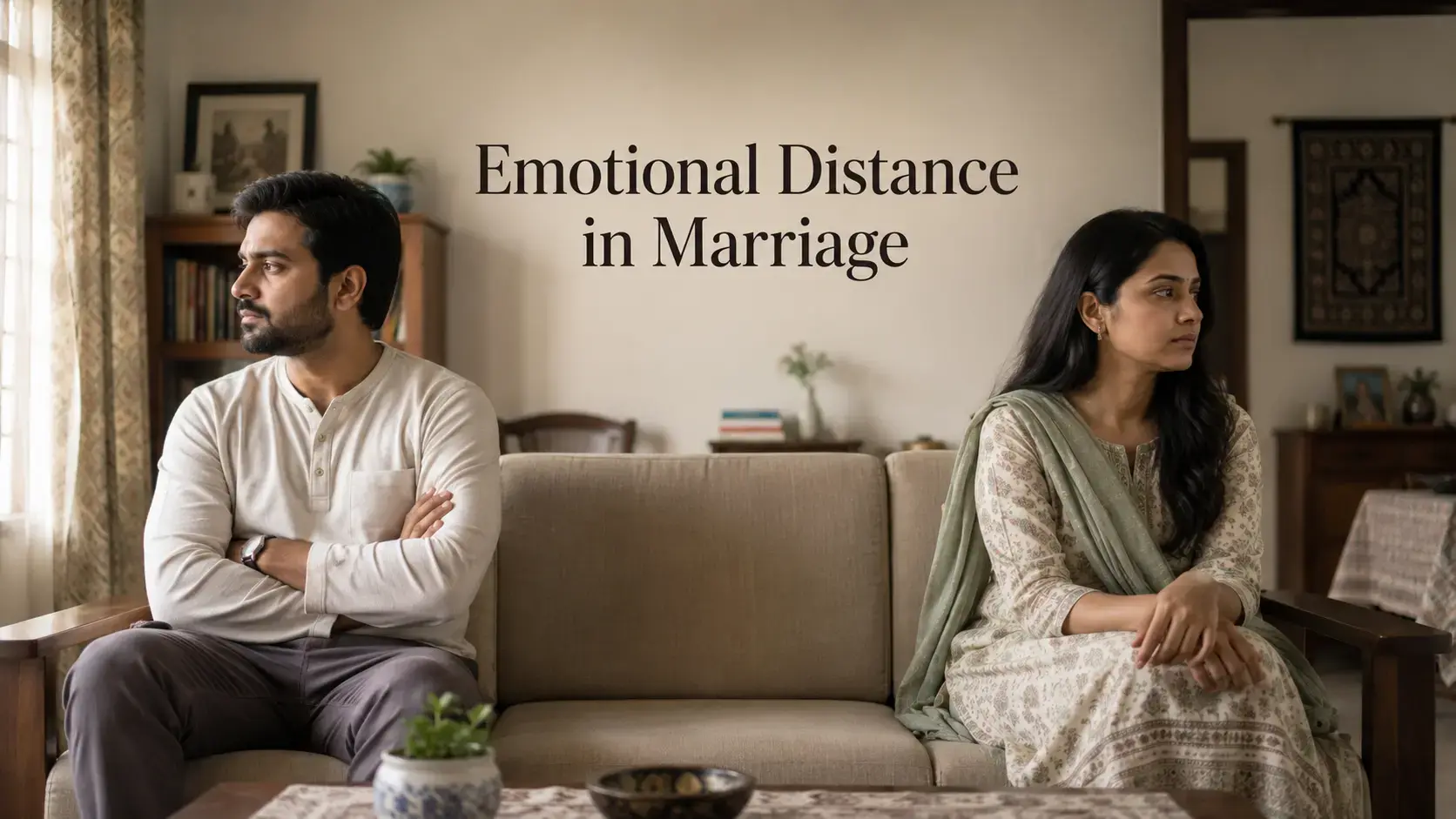
What Causes Emotional Distance in Marriage? Signs, Relationship Changes, and Support Options
Emotional distance in marriage can feel confusing because life may still look normal from the outside. A couple may live together, manage family responsibilities, speak about daily tasks, and still feel that something between them has become quiet. The warmth, attention, comfort, or ease that once felt natural may feel harder to reach.
This does not automatically mean the marriage is failing. Emotional distance can build slowly through stress, tiredness, unresolved hurt, family pressure, health changes, parenting responsibilities, financial worry, or communication habits that make sensitive topics difficult to discuss.
For many Bangladeshi couples, these concerns may stay hidden because privacy matters, family expectations are strong, and emotional or intimacy-related topics can feel uncomfortable to talk about. This article explains the common signs and possible causes of emotional distance in marriage, how it may affect trust and intimacy comfort, and when professional support may be helpful.
Quick Answer
Emotional distance in marriage means partners may feel less emotionally connected, supported, understood, or close than before. It can happen because of stress, unresolved conflict, routine pressure, health concerns, parenting, poor communication, or life-stage changes. It does not always mean lack of love. If the distance is ongoing, distressing, sudden, or linked with health or emotional symptoms, professional support may be appropriate.
What Emotional Distance Can Look Like in Marriage
Emotional distance does not always appear as big arguments. Sometimes it appears as quiet separation inside a relationship.
A couple may still speak every day, but mostly about practical things: food, bills, children, work, family duties, shopping, or schedules. The conversation continues, but emotional sharing becomes rare.
Some common signs may include:
• feeling lonely even when your partner is present
• talking less about feelings, worries, or hopes
• avoiding sensitive conversations
• spending more time on phones, work, or other distractions
• feeling that small conversations become tense quickly
• showing less warmth, patience, or interest
• feeling uncomfortable asking for reassurance
• avoiding closeness because the relationship feels emotionally heavy
• feeling like both partners are living beside each other, not with each other
These signs should not be used to blame either partner. They are patterns to notice, not proof that one person has failed.
In some marriages, emotional distance comes with silence. In others, it comes with frequent arguments. Both can create the same result: partners stop feeling emotionally safe with each other.
Why Emotional Distance Builds Slowly in Many Relationships
Emotional distance often builds through small moments that are not handled well.
One partner feels hurt but says nothing. Another partner feels criticized and becomes defensive. A difficult topic is avoided because the timing feels wrong. Then another topic is avoided. Over time, the couple learns how to function, but not how to connect.
This slow drift may happen when:
• small conflicts are never repaired
• one partner feels unheard for a long time
• both partners are tired and emotionally unavailable
• conversations become mostly practical
• family or work pressure leaves little private time
• one or both partners avoid vulnerability
• sensitive topics are linked with shame or embarrassment
• old disappointments are carried silently
The problem is not always one dramatic event. Sometimes the distance comes from many small missed chances to listen, comfort, explain, apologize, or reconnect.
That is why emotional distance in marriage can be hard to explain. Nothing may look clearly “wrong,” yet the relationship feels less warm than before.
When Silence Becomes a Pattern
Silence is not always harmful. Some people need quiet time to think, rest, or calm down. But silence becomes a concern when it replaces honest communication for a long time.
A partner may stop sharing because they expect criticism. Another may stop asking questions because the answers feel distant. One person may avoid conflict, while the other feels abandoned by the avoidance. Then both partners may believe the other person does not care.
This pattern can become painful because silence leaves too much room for guessing.
One partner may think, “They do not love me anymore.”
The other may think, “No matter what I say, it will become a fight.”
Neither assumption may be fully true. But without a safe conversation, both people may continue reacting to what they fear rather than what is actually happening.
Healthy reconnection usually begins by making sensitive conversations feel less threatening.
How Stress, Routine, and Life Pressure Can Reduce Closeness
Marriage does not happen separately from real life. Work pressure, poor sleep, financial stress, parenting responsibilities, caregiving, family expectations, and health worries can all affect emotional availability.
A person who is exhausted may seem cold. A person under pressure may become impatient. A partner who feels overwhelmed may have less energy for conversation, affection, or reassurance. Over time, both people may start taking the distance personally.
Stress may affect emotions, sleep, concentration, behaviour, and daily functioning. This is why a couple should not treat every change in closeness as a character problem or relationship failure. NHS guidance also highlights open conversation, listening, respect, and support as important parts of healthy relationships and mental wellbeing.
In Bangladesh, many couples also manage pressure from extended family, social expectations, financial responsibility, and limited private space. A husband and wife may not get enough calm time to talk without interruption. This can make small problems stay hidden until they become bigger.
Emotional distance may not mean the couple does not care. It may mean both partners are carrying more pressure than the relationship has space to process.
How Emotional Distance May Affect Intimacy, Trust, and Relationship Comfort
Intimacy is not only physical. It can include emotional closeness, trust, warmth, comfort, shared attention, and feeling accepted by a partner. When emotional distance grows, intimacy comfort may also change.
A partner may feel less willing to be close when they feel ignored, judged, criticized, or emotionally unsafe. Another partner may feel rejected without understanding the emotional pressure behind the distance.
Emotional distance may affect intimacy when:
• partners stop sharing personal feelings
• unresolved hurt makes closeness feel uncomfortable
• one partner feels pressured instead of understood
• trust feels weaker because sensitive topics are avoided
• health or stress concerns are hidden because of embarrassment
• affection starts to feel like duty instead of connection
• one partner feels lonely but does not know how to say it safely
This does not mean intimacy concerns always come from emotional distance. Health conditions, pain, poor sleep, medication effects, childbirth, menopause, hormonal changes, anxiety symptoms, depression symptoms, chronic illness, and long-term stress may also contribute.
The safer approach is to avoid quick conclusions. A change in closeness does not automatically mean lack of love, betrayal, or relationship failure.
Temporary Distance vs a Pattern That Needs Attention
Not every period of distance is serious. Some couples feel less connected during busy seasons, after childbirth, during financial pressure, during illness, while caring for family members, or during major life transitions.
Temporary distance may improve when both partners get more rest, talk calmly, reduce pressure, or understand what has changed.
But emotional distance deserves more attention when:
• it continues for weeks or months without improvement
• one or both partners feel lonely, rejected, or emotionally unsafe
• attempts to talk always become conflict or silence
• intimacy concerns are causing distress
• one partner feels pressured, controlled, humiliated, or afraid
• mood, sleep, energy, appetite, or daily functioning changes noticeably
• there are physical symptoms such as pain, severe fatigue, dizziness, or ongoing discomfort
• the concern may be linked with a known health condition or medication
The point is not to panic. The point is to stop ignoring a pattern that is affecting wellbeing.
Bangladesh Context: Why Many Couples Stay Silent Too Long
In Bangladesh, many married couples are not used to speaking openly about emotional distance, intimacy concerns, or personal disappointment. Some people worry that discussing these issues means disrespecting the marriage. Others fear that private concerns may become family gossip. Some feel embarrassed to speak to a doctor, mental health professional, or counsellor.
This silence can delay help.
A couple may continue living together, attending family events, raising children, and managing responsibilities while feeling emotionally far apart. Because the outside structure remains stable, the emotional concern may be ignored.
Cultural values around family, modesty, and privacy should be respected. But privacy should not become a reason to ignore distress, health symptoms, repeated conflict, or emotional harm.
Seeking help from a qualified professional can be a responsible choice. It does not mean the marriage is broken. It means the concern is important enough to handle carefully.
Healthy Ways to Reconnect Without Pressure
Reconnection should not feel forced. Emotional closeness usually returns better when both partners feel respected, not cornered.
A healthier starting point is to reduce blame and increase clarity.
Instead of saying, “You have changed,” a calmer approach may be: “I feel we have become distant, and I want to understand what has been happening between us.”
Instead of demanding immediate closeness, it may help to begin with small, steady changes:
• choose a calm time to talk
• speak about one issue at a time
• describe what you feel instead of accusing
• ask what your partner has been experiencing
• listen without preparing a defence immediately
• avoid bringing up every past mistake in one conversation
• create small moments of attention during the day
• protect private conversations from family involvement when possible
• take a pause if the conversation becomes too heated
• return to the topic later instead of burying it completely
Small repair matters. A short honest conversation, a respectful apology, a moment of patience, or a kind question can slowly rebuild emotional safety.
The goal is not to force the relationship back to how it used to be. The goal is to understand what both partners need now.
When Emotional Distance May Need Professional Support
Some emotional distance improves with rest, better timing, calmer communication, and small efforts to reconnect. But some situations need professional support.
Consider speaking with a qualified healthcare professional, mental health professional, or relationship counsellor if:
• emotional distance is ongoing, sudden, or getting worse
• one or both partners feel distressed, lonely, or emotionally unsafe
• conversations repeatedly become conflict, avoidance, or shutdown
• intimacy concerns are affecting wellbeing or daily life
• there are anxiety symptoms, depression symptoms, mood changes, severe fatigue, poor sleep, dizziness, pain, or other concerning health signs
• the concern may be linked with diabetes, heart disease, hormonal issues, medication, childbirth, menopause, long-term illness, or persistent stress
• either partner feels controlled, pressured, humiliated, or emotionally harmed
• the couple cannot discuss sensitive issues without the situation becoming worse
A doctor may be the right starting point when physical symptoms or health conditions are involved. A mental health professional may be helpful when mood, anxiety, stress, or emotional distress is affecting daily life. A relationship counsellor may support couples who feel stuck in repeated patterns.
Couples counselling may be used for concerns such as lack of intimacy, communication breakdown, trust issues, family conflict, life transitions, work stress, or financial pressure. Persistent mood changes, low energy, sleep changes, or daily-functioning problems may also need professional attention.
Do not wait until the relationship feels impossible to discuss the concern. Early support can sometimes make the next step clearer.
What Not to Do When You Feel Emotionally Distant
Emotional distance can make people feel hurt, rejected, or defensive. Still, some reactions can make the situation worse.
Avoid these:
• do not blame one partner immediately
• do not assume distance means lack of love
• do not pressure, guilt, or compare your partner
• do not use silence as punishment
• do not self-diagnose from one sign
• do not stop prescribed medicine without medical advice
• do not take random pills or supplements based on online claims
• do not ignore sudden or persistent symptoms
• do not rely only on social media advice
• do not discuss sensitive issues during anger if it makes things worse
• do not shame yourself or your partner
• do not treat emotional distance as proof that the marriage has failed
A distant phase can be painful, but it should be understood carefully. The cause may be emotional, relational, lifestyle-related, health-related, or mixed.
Short Summary
Emotional distance in marriage can happen slowly, even when daily life looks normal. It may show up as less warmth, less sharing, more silence, repeated misunderstanding, reduced trust, or discomfort around closeness. This does not automatically mean the marriage is failing. Stress, routine pressure, family responsibilities, health concerns, poor sleep, unresolved hurt, and life-stage changes may all contribute.
A safer approach is to notice the pattern without blaming one partner. Healthy reconnection usually begins with calmer timing, respectful conversation, emotional safety, and small moments of repair. If the distance is ongoing, sudden, distressing, or linked with physical or emotional symptoms, professional support may be appropriate.
References
NHS — Maintaining Healthy Relationships and Mental Wellbeing
Supports the importance of healthy connections, open conversation, listening, support, respect, and mental wellbeing in relationships.
NHS — Stress
Supports the cautious mention that stress may affect emotions, sleep, concentration, behaviour, and daily functioning.
Link: https://www.nhs.uk/every-mind-matters/mental-health-issues/stress/
American Psychological Association — Happy Couples: How to Keep Your Relationship Healthy
Supports the role of open conversation, regular check-ins, and seeking help when needed as part of healthy relationship maintenance.
Link: https://www.apa.org/topics/marriage-relationships/healthy-relationships
BACP — Couples Counselling
Supports the careful mention that couples may seek counselling for lack of intimacy, communication breakdown, trust issues, family conflict, life transitions, work stress, or financial pressure.
Link: https://www.bacp.co.uk/about-therapy/what-therapy-can-help-with/relationships/couples-counselling/
National Institute of Mental Health — Depression
Supports cautious mention that persistent mood changes, low energy, sleep changes, concentration issues, and daily-functioning changes may need professional attention.
Link: https://www.nimh.nih.gov/health/publications/depression
Final Disclaimer
This article is for educational purposes only and is not a substitute for professional medical advice, diagnosis, treatment, or relationship counselling. If you have ongoing, sudden, distressing, or concerning symptoms, or if relationship concerns are affecting your wellbeing, speak with a qualified healthcare professional, mental health professional, or relationship counsellor.