Sexual wellness is not shaped only by one symptom, one health issue, or one life stage. For many people, it is also influenced by the way daily life is lived over time. Stress, sleep, energy, movement, routine, nutrition, recovery, and general health patterns can all affect how someone feels physically, emotionally, and relationally. Sometimes the effect is gradual. Sometimes it becomes noticeable only when energy, confidence, or intimacy starts to feel different.
That is why this section matters.
Below are the main lifestyle- and health-related topic areas covered in this section. They are organised to make browsing easier, especially for readers who recognise a pattern in daily life but do not yet know how that pattern may connect to sexual wellness.
In practical terms, the related articles under this page may explore areas such as:
Showing 1 to 5 of 5 results

Some medicines may affect sexual desire, mood, comfort or confidence by influencing the body, hormones or...

Sexual wellness is not only emotional; it can also be linked with heart health, blood flow,...
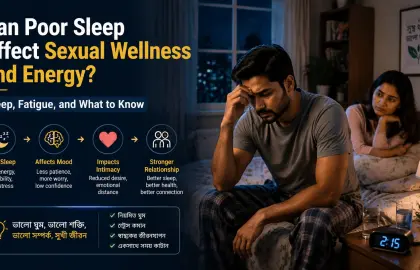
Good sleep supports energy, mood, focus and relationship comfort. When poor sleep, ongoing tiredness or restlessness...

Stress can affect more than mood. It may influence sleep, energy, focus and relationship comfort, which...

Diabetes is not only about blood sugar. It may also affect blood vessels, nerves, tiredness, mood...
Each linked page explores one topic in more detail and helps place it in a broader educational context.
In this section, lifestyle and health factors refers to the everyday patterns that can shape overall wellbeing and, in turn, influence sexual wellness. That may include sleep quality, stress load, energy levels, physical activity, rest, nutrition, hydration, and long-term daily habits.
This does not mean that every concern can be explained by routine alone. It means that daily life often matters more than people realise. Stress that never settles, poor sleep, low activity, exhaustion, or irregular routines can gradually affect comfort, confidence, desire, mood, and energy in ways that may feel confusing if looked at too narrowly.
This section is built around that practical and broader understanding.
Lifestyle and health factors often interact in ways that are gradual rather than obvious. Poor sleep may lower energy and patience. Ongoing stress may affect emotional wellbeing and recovery. Low movement may influence how the body feels. Irregular routines may make it harder to maintain energy, confidence, or a sense of balance.
These influences may also overlap. Someone dealing with long work hours, low-quality sleep, stress, and low physical activity may not feel the effect in one area only. Over time, overall wellbeing can shift in ways that affect intimacy, self-confidence, mood, and relationship comfort.
That is why this section takes a wider view. It recognises that sexual wellness can be shaped by daily life, not only by medical labels.
Lifestyle patterns are not fixed. They change with work, family responsibility, age, health, environment, and life stage. What felt manageable at one time may feel very different later, especially when responsibilities grow and recovery becomes less consistent.
Understanding that can help reduce unnecessary self-blame. It also helps readers look at wellbeing in a more realistic way.
Some concerns may improve when people better understand the role of rest, routine, stress, sleep, or general health patterns. Others may point toward a wider issue that deserves proper professional attention. This section helps readers think more clearly about that difference.
Educational information can support awareness, but professional care may be appropriate when concerns involve persistent fatigue, ongoing stress affecting daily life, sleep problems that do not improve, or changes that begin to affect overall health and wellbeing more significantly.
If you are here because stress, sleep, energy, routine, or general health patterns may be affecting sexual wellness, the best next step is to choose the article that feels closest to the concern you are trying to understand. Some readers may begin with fatigue or sleep. Others may start with stress, movement, nutrition, or broader questions around wellbeing and routine.
There is no single correct entry point.
What matters is that the path feels clear, respectful, and useful. This section is here to help make that next step easier.
This content is intended for educational purposes only and should not be treated as medical advice. For diagnosis, treatment, or concerns about your health or symptoms, always speak with a qualified healthcare professional.