Mental and emotional wellbeing can shape the way people experience intimacy, confidence, connection, and sexual wellness. Stress, emotional pressure, self-perception, and internal unease can all influence how closeness is felt, how comfort is expressed, and how people interpret their own responses. These influences are common, but they are also often misunderstood.
The child articles under this hub each take one part of the wider picture and explain it more carefully.
Showing 1 to 4 of 4 results

This BeshiKhushi Learn article explains how mental wellbeing, stress, anxiety, confidence, and communication can affect sexual wellness and emotional comfort. Written for Bangladeshi readers, it offers respectful, non-explicit guidance on...

This BeshiKhushi Learn article explains how emotional pressure around intimacy can affect comfort, readiness, and relationship trust. Written for Bangladeshi readers, it offers respectful, non-explicit guidance on boundaries, calm communication,...
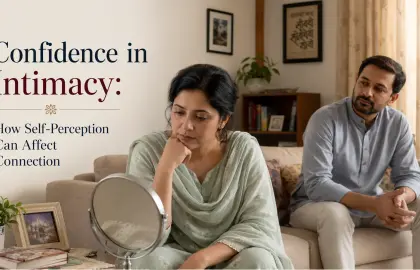
This BeshiKhushi Learn article explains how self-perception can affect confidence, emotional comfort, and relationship connection. Written for Bangladeshi readers, it offers respectful, non-explicit guidance on insecurity, comparison, communication, boundaries, and...

Explains how everyday stress and emotional load can influence feelings, attention, and experiences related to sexual wellness.
These articles help readers move from broad uncertainty to clearer understanding, without turning emotional experience into oversimplified advice or unnecessary medical framing.
Mental and emotional wellbeing is not separate from intimacy. The way people feel inside can affect how they experience closeness, confidence, safety, desire, comfort, and connection. Emotional stress, self-consciousness, anxiety, or low confidence may shape intimate experience in ways that are real, but not always easy to describe.
That matters because many people try to understand intimacy only through outward behaviour, while ignoring the inner emotional context that may be influencing it. Feelings such as pressure, worry, vulnerability, or self-doubt can affect how a person responds, even when they are not always obvious from the outside.
A lot of people feel confused by emotional responses connected to intimacy. They may notice stress, anxiety, self-consciousness, or emotional pressure affecting how they feel, but may not have the language to understand it clearly. In some cases, they may assume something is “wrong” when what they really need first is better context.
Good educational content can reduce that confusion. It can help readers understand that emotional wellbeing and sexual wellness are not separate worlds. It can also help them recognise that internal experiences such as stress, fear of judgment, vulnerability, confidence, or emotional overload may influence connection in ways that feel personal, but are not always simple.
This kind of understanding does not replace professional support when it is needed. What it can do is create a calmer, more informed starting point. That matters on a topic where silence, shame, and misunderstanding often make things feel heavier than they need to.
This hub focuses on emotional and mental factors that may influence intimacy, confidence, and sexual wellness. The content is written to improve understanding, not to tell readers what they should do or how they should feel.
Here, readers can explore questions such as:
The goal is to give readers language, perspective, and a more balanced understanding of the topic. It is not to offer treatment, coping methods, or psychological advice.
This is where the boundaries need to stay clean.
This hub does not diagnose mental health conditions, provide therapy advice, offer coping exercises, or replace professional mental health support. It also does not present products or services as answers to emotional or psychological experiences.
Its role is educational only. That boundary matters because emotional topics are easy to mishandle when content tries to sound more authoritative than it should.
The Mental & Emotional Wellbeing hub connects to several other areas of the Beshi Khushi knowledge structure.
It builds on Intimacy Education by adding emotional and psychological context to the conversation. It complements Intimacy & Relationships by focusing more on inner experience than relational dynamics. It also supports Wellness by helping readers understand how everyday emotional strain may shape lived experience. At the same time, it provides useful background for Health Conditions without turning emotional questions into medical claims.
This makes the hub useful for readers who want to understand the emotional side of intimacy before moving into more specific topics.
This topic may be useful for readers who:
No personal disclosure is required. No action is required. The content is designed to be accessible, respectful, and useful to readers who simply want a better understanding of the topic.
Beshi Khushi approaches this area with a few clear principles:
That approach matters because emotional topics lose trust quickly when they are written carelessly, dramatized for attention, or stripped of nuance.
If you are starting here, move next to the article that feels closest to the question already in your mind. Some readers may want to understand stress. Others may be looking for clarity around anxiety, confidence, self-perception, or emotional pressure.
That is the purpose of this hub. It gives readers a grounded starting point, then helps them move into the deeper articles with better context, clearer language, and less confusion.
Disclaimer: This content is provided for educational purposes only and should not be considered medical or psychological advice. For diagnosis or treatment of any mental health condition, consult a qualified healthcare or mental health professional.