Culture and religion shape how many people understand intimacy, relationships, marriage, privacy, and sexual wellbeing. They influence what is spoken about openly, what is treated as private, what is expected within marriage, and how people make sense of their own feelings and experiences. In Bangladesh, these influences are often deeply woven into family life, community expectations, and personal identity.
The Cultural & Religious Perspectives hub on Beshi Khushi is designed to help readers understand that context more clearly. This page is educational. It is not intended to offer religious instruction, moral judgment, or personal guidance. Its purpose is to support awareness and understanding around how cultural values, social norms, and religious beliefs may shape the way intimacy is understood and discussed.
The articles under this hub each focus on one part of the wider picture.
Showing 1 to 5 of 5 results

This article explains how Bangladeshi readers can care for personal well-being while respecting belief systems, family values, modesty, privacy, and cultural expectations. It offers calm guidance on emotional comfort, boundaries,...
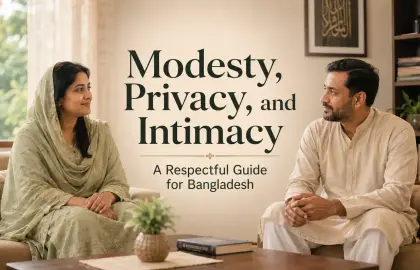
This article explains how modesty, privacy, and intimacy can be understood with dignity in Bangladesh. It covers personal boundaries, emotional comfort, respectful communication, family and cultural expectations, and when to...
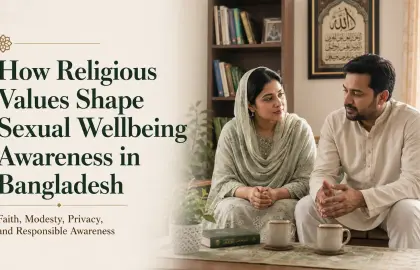
This article explains how religious values shape respectful sexual wellbeing awareness in Bangladesh. It discusses modesty, privacy, marriage expectations, personal boundaries, emotional comfort, and safe learning without judgment. The guide...

This article explains how marriage, intimacy and cultural expectations shape relationship wellbeing in Bangladesh. It discusses family involvement, privacy, modesty, emotional comfort, boundaries and respectful communication, helping readers understand married...
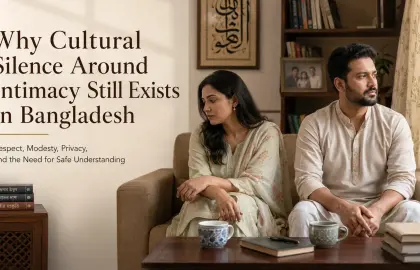
This article explains why many people in Bangladesh avoid open conversations about intimacy, privacy, emotional comfort, and personal boundaries. It explores family expectations, modesty, religious values, social judgment, and the...
Together, these articles help readers move from broad uncertainty to more specific insight, without treating culture or religion as something simple, uniform, or easy to generalise.
Intimacy is not understood in the same way everywhere. Cultural background, religious values, family expectations, and social norms can all shape the language people use, the boundaries they observe, and the kinds of conversations they feel able to have.
For some people, intimacy is understood mainly through the framework of marriage, modesty, privacy, and responsibility. For others, the experience may also include internal questions about personal wellbeing, emotional comfort, or the difficulty of discussing intimate concerns openly. These realities do not exist outside culture or belief. They are shaped by them.
That is why this topic needs careful handling. It is not only about sexual wellness. It is also about silence, values, expectation, respect, and the difference between what people feel privately and what they feel permitted to discuss publicly.
This hub exists to make that context easier to understand. Not to challenge beliefs. Not to issue rulings. And not to tell readers what they should believe or do.
Many people try to understand intimacy without fully recognising how much cultural and religious context influences the conversation. In practice, that context can shape what people see as appropriate, what they hesitate to ask, and how they interpret their own concerns.
For some readers, the challenge is not lack of interest in understanding. It is the difficulty of finding information that feels respectful. They may want clarity without being judged. They may want to think about personal wellbeing without feeling that they must reject family values, religious commitment, or social expectations in order to do so.
That is why a careful educational approach matters. It allows readers to explore the subject with more understanding and less confusion. It also helps create room for nuance, especially on topics where shame, silence, or misunderstanding often replace thoughtful discussion.
This hub focuses on how cultural and religious context can influence the way intimacy is understood, experienced, and discussed. The content is designed to improve awareness, not to settle religious questions or direct personal decisions.
Readers can expect to explore questions such as:
The aim is to give readers context, perspective, and a more respectful understanding of the topic. It is not to argue with belief systems or to promote one point of view over another.
The boundaries here matter.
This hub does not interpret religious texts, issue rulings, provide moral judgment, or give personal advice. It does not tell readers what beliefs they should hold, what behaviour they should adopt, or how they should resolve personal questions of faith, ethics, or family expectation.
Its role is educational and contextual only. That boundary is there to protect trust, clarity, and respect.
The Cultural & Religious Perspectives hub adds important context across the wider Beshi Khushi platform.
It complements Intimacy Education by bringing cultural awareness into the conversation. It supports Intimacy & Relationships by showing how social expectations and shared values may influence relationship dynamics. It also connects with Wellness by helping readers understand how normalization, silence, or stigma can affect the way people think about personal wellbeing. At the same time, it adds sensitivity to Health Conditions without turning the discussion into medical framing.
This makes the hub useful for readers who need context first before moving into more focused topics.
This topic may be useful for readers who:
No action is required. No belief change is assumed. The content is written to support understanding, not to push readers in a particular direction.
Beshi Khushi approaches this area with a few clear principles:
That matters because this topic loses credibility very quickly when it is written carelessly, dismissively, or with hidden agendas.
If you are starting here, move next to the article that best matches the question already on your mind. Some readers may want to understand modesty and privacy. Others may be thinking about marriage expectations, cultural silence, religious values, or the tension between belief systems and personal wellbeing.
That is the purpose of this hub. It gives readers a respectful starting point, then helps them continue into the deeper articles with better context, clearer language, and less confusion.
Disclaimer: This content is provided for educational purposes only and should not be considered religious instruction, moral guidance, or medical advice. Individuals seeking religious or spiritual guidance should consult qualified community or faith leaders.